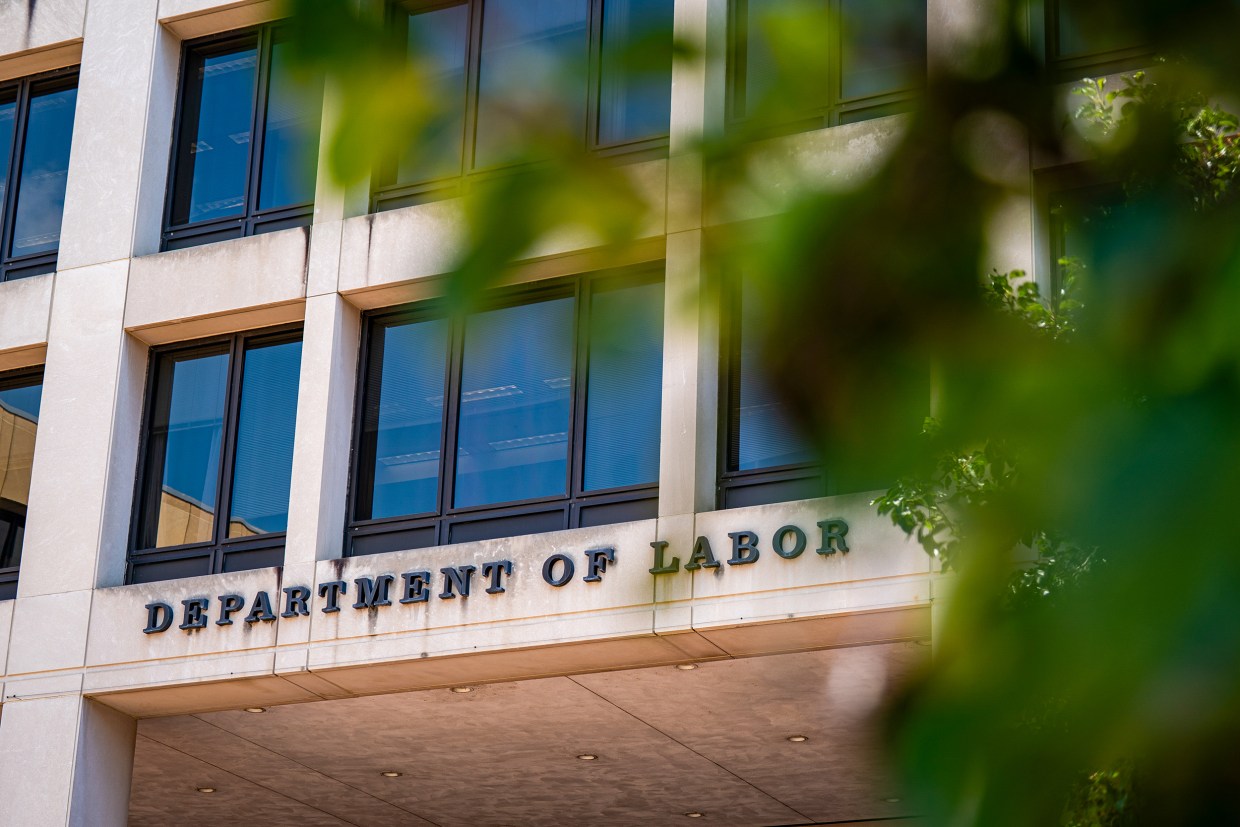
A growing wave of uncertainty has surrounded Washington as questions mount over the fate of crucial U.S. economic data. With the federal government shutdown dragging on, the release of key statistics that guide monetary and fiscal policy has been cast into doubt — leaving economists, investors, and policymakers without vital insights into the health of the economy.
White House signals data disruption
The White House declared on Wednesday that the employment and consumer price index (CPI) data, initially slated for release in October, might never see the light of day, even once government functions resume. Press Secretary Karoline Leavitt expressed concerns that this disruption could inflict permanent damage on the nation’s statistical framework, implying that Federal Reserve policymakers might be forced to operate without dependable economic metrics during a crucial period.
Leavitt’s comments stunned both analysts and those observing the market. A common assumption was that the postponed data would be released within days of the shutdown concluding. Research groups from prominent financial entities, such as Morgan Stanley, had anticipated the September employment report’s publication soon after government operations resumed. Nevertheless, Leavitt’s declaration injected a fresh element of doubt, suggesting the September statistics might never be disclosed.
Her remarks regarding the October Consumer Price Index report were met with less astonishment, given that numerous financial experts had already foreseen significant interruptions in data compilation. Since federal personnel were prevented from collecting and analyzing inflation metrics from October 1, the generation of a thorough report seemed improbable. The most recent official employment report accessible to the public is still the one from August, which was released on September 5, several weeks prior to the commencement of the shutdown.
Confusion over what data will be lost
Leavitt’s comments also raised a crucial query: was her declaration referencing the September job figures, initially slated for release on October 3, or the October report, which was set for November 7? Representatives from the Bureau of Labor Statistics (BLS) and the Department of Labor have not yet specified which data sets might be indefinitely withheld.
The lack of transparency has unsettled both financial markets and government officials. Economic indicators, including the monthly employment statistics and consumer price index data, are crucial for guiding the Federal Reserve’s interest rate policies and providing businesses and investors with insights into the economy’s trajectory. Without these, experts are concerned that both public and private entities might be left operating without clear direction.
Economists have described the situation as a “data fog” — a period in which the lack of official statistics makes it difficult to measure economic performance accurately. In the absence of timely federal data, private sources like payroll processor ADP’s employment report are being scrutinized more closely than usual. ADP’s latest report indicated that private employers added 42,000 jobs in October, a modest gain that contrasts with the more fragile trends shown in the last official government reports.
The Fed’s challenge amid uncertainty
For the Federal Reserve, the lack of official government data poses a considerable policy challenge. Chairman Jerome Powell has recognized the problems that emerge when vital metrics are inaccessible. In a statement made just before the shutdown, Powell likened the scenario to “driving in the fog,” stressing that such circumstances necessitate increased prudence in making decisions.
The upcoming Federal Reserve policy gathering, set for December, might be influenced by the absence of definitive economic statistics. Although Powell refrained from confirming any shifts in approach, he suggested that the central bank could reduce the speed of its modifications until dependable data is once again accessible. Financial experts indicate this could result in a halt to interest rate fluctuations or a postponement of other monetary policy choices.
In the interim, financial sectors are left to decipher disparate indicators. Equity traders and fixed-income investors customarily depend on employment figures and price growth statistics to assess the economic path and foresee the Federal Reserve’s subsequent actions. Given the absence of these metrics, market fluctuations might intensify, as participants are compelled to depend on less reliable private data collections and informal observations.
Enduring Consequences for the Integrity of U.S. Data
Beyond the immediate market impact, the White House’s warning has triggered a broader discussion about the resilience of America’s statistical systems. Some experts fear that the current disruption could set a precedent that undermines confidence in the reliability and continuity of federal data collection.
Leavitt suggested that the situation may have inflicted lasting damage on the agencies responsible for producing economic reports, warning that even when data collection resumes, its accuracy and consistency could be compromised. Economists generally regard the Bureau of Labor Statistics and related agencies as global benchmarks for transparency and reliability, so any loss of confidence in their output could have far-reaching implications for financial markets and policy analysis.
While some observers remain optimistic that the missing data can eventually be reconstructed, others caution that critical gaps could persist. Historical datasets — particularly those used to track long-term labor trends, wage growth, and inflation patterns — rely on continuity. Once disrupted, these records can be difficult, if not impossible, to fully restore.
Private companies, university scholars, and government officials rely extensively on these statistics to inform choices impacting millions of citizens in the United States, ranging from establishing interest rates to calculating social welfare payments. Consequently, the absence or deterioration of such information could hinder not only immediate policy choices but also future economic strategies.
Searching for alternative sources
In the absence of official figures, financial entities and research organizations are increasingly relying on private-sector data suppliers to bridge the information gap. Although these analyses can provide useful perspectives, they frequently fall short of the breadth and uniformity found in governmental data. For example, private employment surveys might identify job market patterns within specific industries but overlook changes in minor sectors or regional differences.
Experts note that even a temporary reliance on private data could alter the way markets and policymakers interpret the economy. Without standardized benchmarks, comparisons across time and geography become less reliable. Moreover, because many private data providers operate for profit, their methodologies and access to raw data may not always be transparent.
The challenge, economists say, lies in distinguishing between short-term adjustments and long-term consequences. While private data may help bridge the current gap, it cannot fully substitute for the comprehensive and neutral analysis provided by official agencies. The question, therefore, is not only how to manage the current crisis but how to ensure that the integrity of the U.S. statistical system is safeguarded in the future.
Steering through financial instability
As the shutdown continues, the absence of essential reports underscores a deeper issue: the fragility of the nation’s data infrastructure. In an era where real-time analytics and evidence-based policymaking are central to economic stability, any disruption to data collection can have cascading effects.
For the time being, both financial backers and government officials need to advance carefully, depending on fragmented and possibly contradictory data. This event underscores that every significant policy choice — ranging from interest rate modifications to budgetary strategies — is underpinned by a complex network of information that relies on the uninterrupted operation of public bodies.
As the situation unfolds, one thing has become clear: transparency and trust in economic data are indispensable to the nation’s stability. Without them, even the most sophisticated economies can find themselves, as Jerome Powell described, driving through the fog with no clear sense of direction.