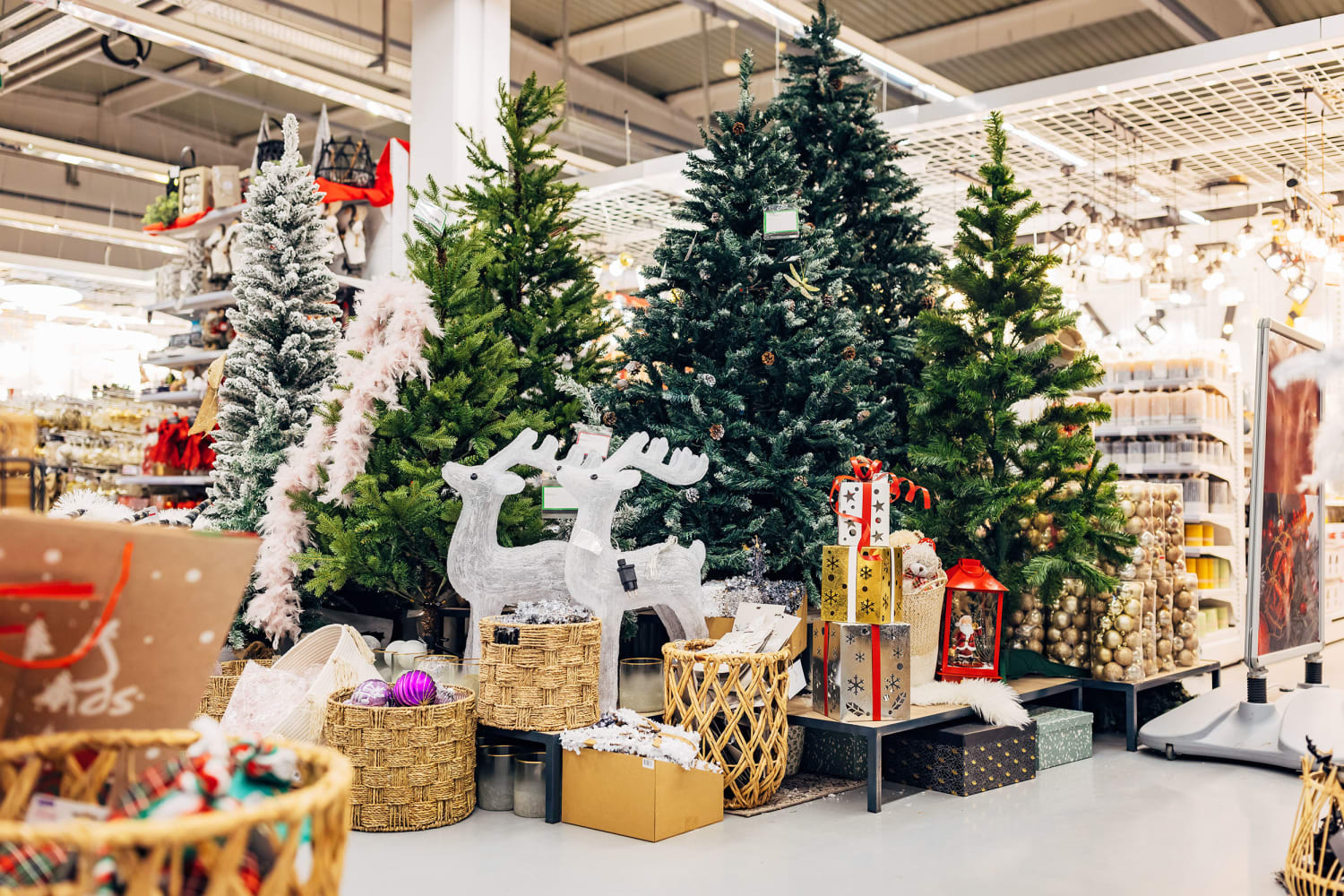
This year, the festive spirit might come with a slightly higher price tag, as international trade disputes are pushing up the cost of synthetic Christmas trees and holiday ornaments throughout the United States. Importers and merchants are bracing for a season characterized by increased expenses, restricted availability, and careful consumer expenditures, as tariffs redefine the holiday retail landscape.
Rising costs cast a shadow over holiday decor
Artificial Christmas trees, a common sight in numerous homes, are projected to be 10% to 20% pricier compared to the previous year. This increase is primarily due to tariffs imposed on imported items, with decorative lighting experiencing the most significant hikes—in certain instances, as much as 63%. Given that most Christmas decorations for the general market have historically been produced abroad, these tariffs have generated widespread consequences across the sector.
For the majority of businesses, producing these items within the country isn’t a viable option. The substantial expenses associated with establishing manufacturing plants, acquiring extensive machinery, and educating staff would lead to a significant surge in consumer prices. As stated by Mac Harman, the creator and CEO of Balsam Hill, manufacturing trees in the U.S. could elevate the cost of an $800 tree to almost $3,000.
“The equipment needed to produce artificial trees can span the size of a football field,” Harman explained, noting that much of the machinery is fixed and cannot easily be transported. Additionally, prelit trees — the most popular option among consumers — require extensive manual labor to string the lights, a process typically done by hand by skilled workers in Asia.
A global supply chain under strain
For many years, nations such as Thailand and China have been the primary producers of Christmas ornaments. Currently, approximately 90% of the globe’s commercially available festive decorations are manufactured in China. However, this leading position has faced challenges due to increasing U.S. tariffs on products from China.
Anticipating these challenges, Balsam Hill began diversifying its supply chain after the 2016 presidential election, shifting part of its production to other countries. Harman estimates that roughly one-third of the company’s products now come from outside China. Even with these changes, tariffs ranging from 20% to 30% have added considerable costs, forcing many importers to reduce inventory to manage expenses.
The total availability of synthetic trees across the United States is anticipated to decrease by roughly 15% this year, potentially restricting options for consumers who delay their purchases until later in the season. Prominent retailers such as Costco have also reduced their holiday decoration selections, with CEO Ron Vachris confirming that the company has “streamlined” its inventory due to unpredictable market circumstances.
Despite these challenges, the National Retail Federation (NRF) anticipates a strong retail period. Overall holiday expenditures in the U.S. are projected to exceed $1 trillion for the inaugural time, with the typical shopper intending to allocate around $270 towards non-gift purchases like decorations, gift wrap, and greeting cards.
Living trees are unaffected by duties
Although the cost of artificial trees keeps rising, the prices of real trees are projected to stay stable. The majority of natural Christmas trees purchased in the U.S. are cultivated within the country, and those brought in from Canada are not subject to tariffs due to the U.S.-Mexico-Canada trade pact. This safeguard is in place even with the imposition of new duties on Canadian timber entering the nation.
According to the Real Christmas Tree Board, 84% of growers surveyed said they do not plan to raise prices this year. Marsha Gray, the board’s executive director, emphasized that live tree producers are in a strong position, with ample inventory and healthy crops. “We’re one of the few industries that can say we don’t have to worry about tariffs,” she said.
Considering that a Christmas tree requires almost ten years to reach full growth, the availability of live trees is largely unaffected by immediate economic fluctuations. Gray highlighted that present inventory levels are the most robust observed in more than a decade, guaranteeing that households favoring the aroma and custom of an authentic tree will find numerous choices at consistent prices.
Festive cheer despite financial instability
Even with tariffs and worldwide supply chain disruptions impacting the cost of artificial trees, consumer attitudes are holding remarkably firm. The NRF anticipates that numerous households will modify their purchasing behaviors instead of completely foregoing purchases, with some choosing more compact trees or fewer ornaments while still preserving the holiday cheer.
Retail experts also note that early shopping trends suggest Americans are planning ahead to avoid last-minute shortages. “Every year, no matter the challenges, the holiday season finds its rhythm,” said NRF President Matthew Shay. “People save for it, plan for it, and make it a priority.”
In conclusion, although tariffs might slightly increase the cost of Christmas for individuals who favor the ease of an artificial tree, the lasting charm of festive customs persistently prevails. Regardless of whether it’s the gentle radiance of fairy lights or the crisp aroma of pine, households nationwide are getting ready to commemorate – demonstrating that even financial obstacles cannot diminish the holiday cheer.