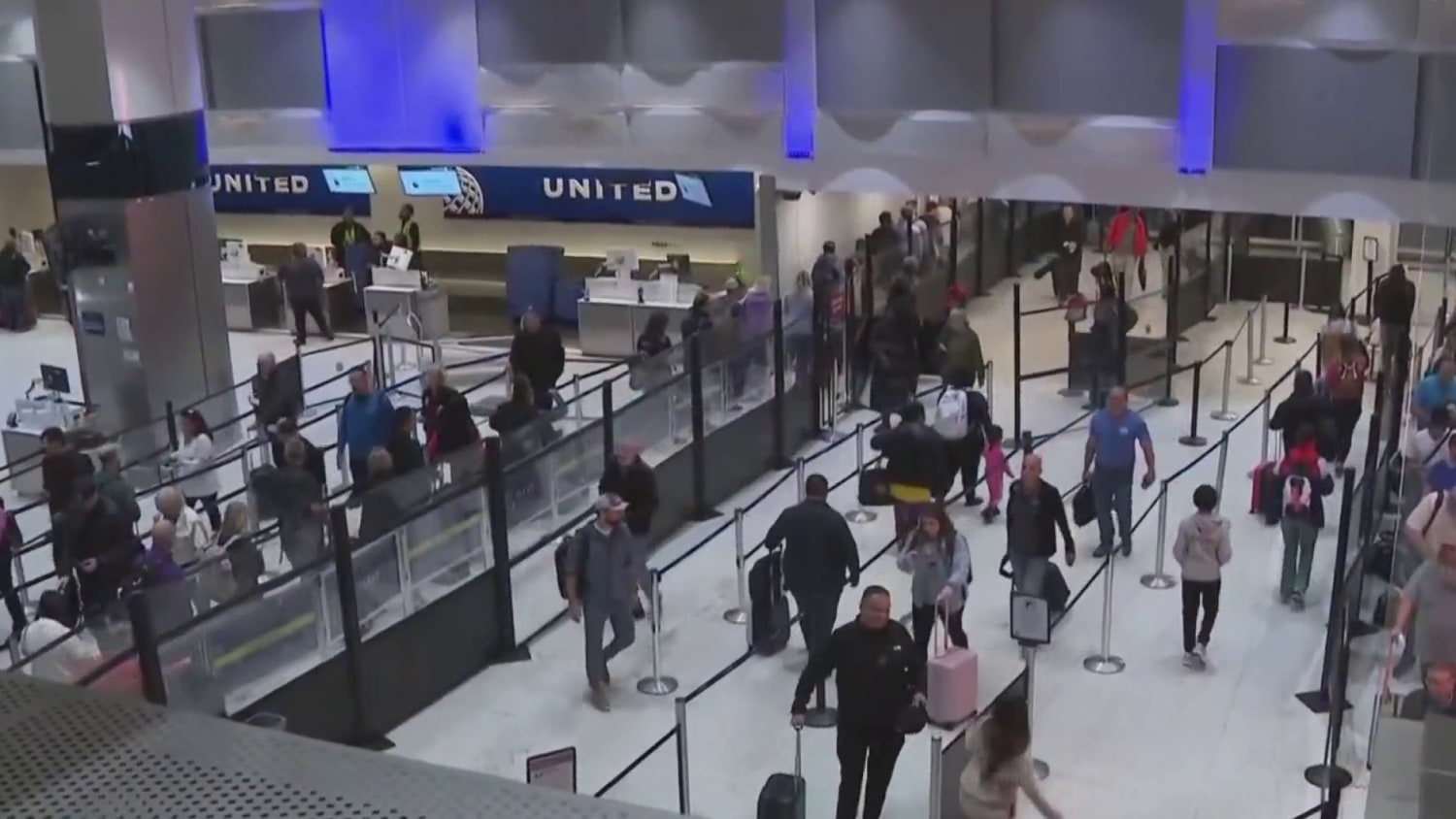
With the government shutdown entering its second month, the Federal Aviation Administration (FAA) has declared a reduction in flights across several of the country’s most active airspaces. This decision arises from increasing worries regarding personnel deficits and exhaustion among air traffic controllers, who have been operating without compensation.
Transportation Secretary Sean Duffy confirmed that beginning this Friday, air traffic capacity will be cut by 10% at approximately 40 airports across the country. According to Duffy, the decision aims to alleviate mounting pressure on critical areas of the aviation network. “This is about identifying where the strain is and taking steps to relieve it,” he said during a press briefing.
FAA Administrator Bryan Bedford clarified that the decrease in flight availability is a direct consequence of the necessity to tackle exhaustion among air traffic controllers. Many of these professionals have persistently performed their duties with unwavering dedication, despite the financial and emotional strain imposed by the continuous shutdown. The roster of impacted airports is anticipated to be published soon, and the initiative will be rolled out incrementally—starting with a 4% decrease in flights this Friday, a 5% reduction on Saturday, and escalating to the complete 10% by the following week.
Mounting delays and growing concerns
The announcement follows a turbulent period for U.S. aviation, as thousands of passengers have already experienced disruptions caused by staffing shortages. Over the past weekend, more than 5,000 flights were delayed nationwide, with major hubs such as Chicago O’Hare, Newark Liberty, JFK, and Hartsfield-Jackson Atlanta International Airport facing the most severe impacts.
Data from FlightAware showed that on Monday alone, nearly 2,900 flights were delayed, with 70 cancellations reported. By Tuesday, cancellations had doubled to 148, while delays remained above 2,000. As of Wednesday evening, over 2,100 flights were delayed and 164 canceled across domestic and international routes. Although FlightAware does not specify causes for each delay, officials confirmed that the staffing crisis linked to the shutdown has been a major factor.
Transportation Secretary Duffy warned travelers to expect “significant disruptions” in air travel, especially as the holiday season approaches. Speaking in a television interview, he explained that the lack of pay for air traffic controllers has led to an unsustainable situation. “If we’re still in shutdown mode by Thanksgiving, it’s going to be very rough out there,” Duffy said. “We’ll do our best to maintain safety, but on-time departures and arrivals will be harder to guarantee.”
He additionally voiced apprehension that certain controllers have been compelled to undertake supplementary employment to fulfill their monetary commitments, thereby intensifying their exhaustion. “They’re doing what’s necessary to get by,” he remarked. “We desire their full attention and presence, yet we cannot disregard the fact that they’ve endured weeks without compensation.”
Fatigue and safety under pressure
FAA Administrator Bedford emphasized that the agency cannot wait for the situation to deteriorate further before taking action. “We’re already seeing the effects of fatigue in the system,” he said. “Controllers have been operating under extreme stress, and it’s beginning to show.”
According to Bedford, the FAA is taking proactive steps to prevent a decline in safety standards. “We can’t ignore the signs of strain,” he said. “Reducing flight volume is a temporary but necessary measure to ensure that we maintain control of the airspace safely.”
The shortage of air traffic controllers has been estimated at between 2,000 and 3,000 positions, a number that continues to grow as the shutdown drags on. While essential personnel are required to report for duty even without pay, the prolonged financial uncertainty has placed unprecedented pressure on the workforce.
Officials indicated that additional measures could follow if the situation does not improve. “We’re monitoring this hour by hour,” Bedford said. “If the pressure persists, we will take further steps to maintain system stability.”
Aviation companies prepare for instability
Airlines have started modifying their operations in preparation for the FAA’s planned capacity reductions. United Airlines’ chief executive, Scott Kirby, informed staff that regional and domestic flights not linked to primary hubs would experience the most significant impact. Nevertheless, he guaranteed that long-distance international services and flights between hubs would largely remain unchanged to safeguard scheduling reliability and crew management.
Kirby also stated that passengers who prefer not to travel during this period may request a refund, even if their flight has not been directly canceled. Despite the reductions, United and its regional partners still expect to operate about 4,000 flights per day.
American Airlines issued a statement indicating that it expects minimal disruption to its customers’ travel plans, emphasizing that the majority of flights should continue as scheduled. Meanwhile, Airlines for America, an industry trade group, said it is working closely with the federal government to clarify the details of the reduction plan and minimize its impact on passengers and cargo shipments.
The Department of Transportation has been working closely with airline officials to guarantee a structured implementation of the updated flight timetable. “Our goal is an orderly deployment,” stated Bedford, mentioning that the FAA and airline leadership convened on Wednesday evening to finalize the operational specifics.
Effects on travelers and the wider financial system
The ramifications of the FAA’s ruling are anticipated to impact more than just travelers, encompassing airline earnings, the tourism industry, and freight operations. The aviation industry is crucial for sustaining the nation’s economic vitality, and extended interruptions could lead to widespread repercussions.
Travel analysts warn that if the government shutdown continues, the strain on the air travel system could worsen. Longer wait times, last-minute cancellations, and more frequent delays may become the norm, especially during peak travel periods such as Thanksgiving and Christmas.
The Transportation Security Administration (TSA) is confronting increasing difficulties, as its personnel processed approximately 2.7 million travelers last Sunday—a figure representing one of the highest passenger counts recorded since the government closure began. Despite their unwavering commitment, numerous TSA staff members are performing their duties without compensation, which further intensifies the systemic strain on the United States’ aviation framework.
A call for resolution
Secretary Duffy and Administrator Bedford both underscored that the flight reductions are not meant as punishment but as a safeguard for the system’s stability. They stressed that restoring full air traffic operations will depend on resolving the shutdown and returning to normal funding levels.
When asked if normal flight capacity would resume immediately after the shutdown ends, Bedford replied cautiously: “We’ll need to see a return to controller performance levels consistent with pre-shutdown conditions before we fully ramp back up.”
As of now, no timeline has been given for when regular operations might resume, but officials remain hopeful that a swift political resolution could prevent deeper disruptions.
In the meantime, passengers are encouraged to stay informed through airline communication channels and plan for possible changes in their travel schedules. While the FAA’s measures aim to preserve safety amid challenging circumstances, the episode highlights how dependent modern air travel has become on the people who manage its complex and demanding systems.